What is adaptation? A complete guide to how living things survive and thrive
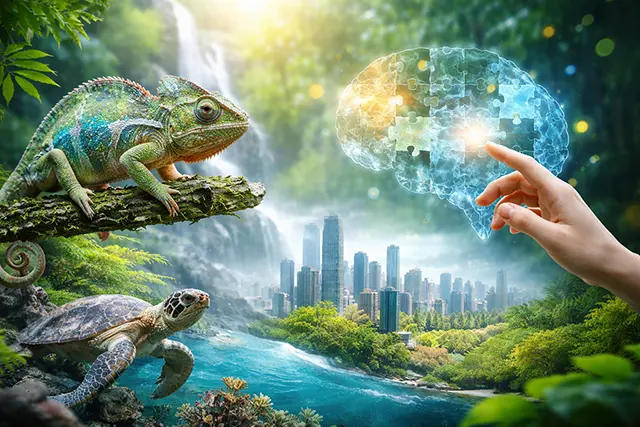
Imagine a polar bear trying to survive in the desert, or a cactus planted in the Arctic tundra. Neither would last very long, would they? Yet polar bears thrive in freezing temperatures, and cacti flourish in scorching heat. The secret to their success lies in a fascinating biological process called adaptation. Read more about adaptation on the web page https://promowayup.com/what-is-adaptation.html. Understanding adaptation helps us make sense of the incredible diversity of life on Earth and explains why different creatures and plants look, act, and function the way they do.
Table of Contents
Understanding the basics of adaptation
Adaptation refers to the process by which living organisms develop special features, behaviors, or internal systems that help them survive and reproduce in their specific environments. These changes don’t happen overnight. Instead, they occur over many generations through the process of natural selection, which was famously described by Charles Darwin in the 1850s.
Think of adaptation as nature’s problem-solving mechanism. Every environment presents unique challenges: extreme temperatures, limited food sources, dangerous predators, or scarce water. Organisms that develop traits helping them overcome these challenges are more likely to survive, reproduce, and pass these helpful traits to their offspring.
There’s an important distinction to make here. When we talk about adaptation in biology, we’re not referring to an individual animal or plant changing during its lifetime. If you move from sea level to a high mountain, your body might produce more red blood cells to help you breathe better in the thin air. That’s acclimatization, a temporary adjustment. True biological adaptation happens across generations, embedded in the genetic code of a species.
The three main types of adaptation
Scientists categorize adaptations into three main types, each serving different survival purposes. Understanding these categories helps us recognize the various ways organisms have evolved to meet environmental challenges.
Structural adaptations
Structural adaptations are physical features of an organism’s body. These are the changes you can see, touch, or measure. They include body parts, body coverings, and even the overall shape of an organism.
Consider the giraffe’s incredibly long neck. This structural adaptation allows giraffes to reach leaves high in trees that other herbivores cannot access, giving them a competitive advantage for food resources. Similarly, the thick blubber layer under a whale’s skin provides insulation in cold ocean waters while also serving as an energy reserve during long migrations.
Bird beaks offer some of the most striking examples of structural adaptation. A hummingbird’s long, thin beak perfectly suits collecting nectar from deep flowers. An eagle’s sharp, hooked beak excels at tearing meat. A pelican’s large pouch captures fish from water. Each beak shape represents millions of years of adaptation to specific food sources and feeding methods.
Behavioral adaptations
Behavioral adaptations are the ways organisms act to improve their chances of survival. These actions can be inherited instincts or learned behaviors passed down through generations.
Migration represents one of the most remarkable behavioral adaptations. Many bird species fly thousands of miles between breeding and wintering grounds, following seasonal food availability. Monarch butterflies travel up to 3,000 miles from Canada to Mexico each fall, a journey programmed into their tiny brains through genetic inheritance.
Hibernation provides another excellent example. Bears, ground squirrels, and some bat species enter a state of drastically reduced metabolism during winter months when food becomes scarce. Their heart rate slows, body temperature drops, and they survive on stored fat reserves until spring arrives.
Even hunting strategies demonstrate behavioral adaptation. Wolves hunt in coordinated packs, using sophisticated communication and teamwork to bring down prey much larger than individual wolves could handle. Orcas in different regions have developed unique hunting techniques passed down through family groups, from beaching themselves to catch seals to creating waves to wash seals off ice floes.
Physiological adaptations
Physiological adaptations are internal body processes that help organisms survive. These adaptations are often invisible from the outside but are crucial for survival in specific environments.
Desert animals like camels have remarkable physiological adaptations for water conservation. Camels can drink up to 40 gallons of water at once, storing it efficiently in their bloodstream. Their kidneys produce highly concentrated urine, and they lose minimal water through sweating, allowing them to survive weeks without drinking.
Venom production in snakes represents a complex physiological adaptation. Different snake species have evolved various venom types suited to their prey and defense needs. Some venoms attack the nervous system, others break down tissue, and some prevent blood clotting. This chemical adaptation gives snakes a powerful tool for hunting and protection despite their lack of limbs.
Antarctic fish have developed antifreeze proteins in their blood that prevent ice crystals from forming in their bodies, allowing them to survive in waters that would freeze other fish species solid. This physiological adaptation is so effective that these fish can swim in temperatures below the normal freezing point of fish blood.
How adaptation actually works through natural selection
Understanding how adaptations develop requires grasping the concept of natural selection, the driving force behind evolutionary change. This process follows a logical sequence that has shaped life on Earth for billions of years.
First, genetic variation exists within every population. No two individuals are exactly alike (except identical twins). These differences come from mutations, random changes in DNA that occur during reproduction. Most mutations are neutral or harmful, but occasionally, a mutation provides some advantage.
Second, organisms produce more offspring than can possibly survive. Whether we’re talking about fish laying thousands of eggs or plants producing millions of seeds, reproduction always exceeds available resources. This creates competition for food, space, mates, and other necessities.
Third, individuals with advantageous traits are more likely to survive and reproduce. A faster rabbit escapes predators more often. A plant with deeper roots survives drought better. These survivors pass their beneficial traits to their offspring at higher rates than individuals lacking these traits.
Finally, over many generations, advantageous traits become more common in the population. This gradual change is evolution by natural selection. The population becomes better adapted to its environment, though it’s important to remember that adaptation is always ongoing as environments continue to change.
Real-world examples of amazing adaptations
Examining specific examples helps illustrate how perfectly organisms can become suited to their environments through the adaptation process.
The Arctic fox
The Arctic fox demonstrates multiple adaptation types working together. Its thick, white winter coat provides both insulation and camouflage against snow (structural adaptation). This coat changes to brown in summer, matching the tundra landscape. The fox has small, rounded ears that minimize heat loss, unlike the large ears of desert foxes that maximize heat dissipation. Behaviorally, Arctic foxes follow polar bears and scavenge their kills, and they cache food during times of plenty to survive harsh periods.
Venus flytrap
This carnivorous plant has adapted to nutrient-poor soils by developing a remarkable hunting mechanism. Its modified leaves form a trap with sensitive trigger hairs. When an insect touches these hairs twice within 20 seconds, the trap snaps shut in less than a second, one of the fastest movements in the plant kingdom. The plant then secretes digestive enzymes to extract nutrients from its prey, compensating for poor soil quality through this structural and physiological adaptation.
Octopus camouflage
Octopuses possess perhaps the most sophisticated camouflage system in nature. They have specialized skin cells called chromatophores, which contain different pigments. By expanding or contracting these cells, octopuses can change color in milliseconds. Additional cells called iridophores and leucophores allow them to create patterns and textures, matching their surroundings with remarkable accuracy. This physiological adaptation helps them both hunt prey and avoid predators.
Saguaro cactus
The iconic saguaro cactus of the Sonoran Desert displays numerous adaptations for extreme aridity. Its accordion-like pleats expand to store up to 200 gallons of water during rare rainstorms. The thick, waxy coating on its skin reduces water loss. Sharp spines protect it from animals seeking moisture while also providing shade and condensing morning dew. Its shallow but widespread root system quickly absorbs water from brief desert rains.
Convergent evolution: When different species develop similar adaptations
Sometimes, completely unrelated organisms develop remarkably similar adaptations to solve the same environmental challenges. Scientists call this phenomenon convergent evolution, and it provides compelling evidence for how powerfully environment shapes adaptation.
Wings evolved independently at least four times: in insects, pterosaurs (extinct flying reptiles), birds, and bats. Each group faced the challenge of flight and developed similar solutions, though the specific structures differ in detail. Similarly, streamlined body shapes evolved separately in sharks (fish), ichthyosaurs (extinct marine reptiles), and dolphins (mammals), all responding to the physics of moving efficiently through water.
The convergent evolution of similar body plans in unrelated species shows that certain solutions work particularly well for specific challenges. It also demonstrates that adaptation is not random but constrained by the laws of physics, chemistry, and the available biological building blocks.

Adaptation and extinction: Why some species fail to adapt
Not all species successfully adapt to changing conditions. When environments change faster than populations can evolve, or when changes are too extreme, extinction results. Understanding why adaptation sometimes fails helps us appreciate both the power and limitations of this process.
The fossil record shows that over 99% of all species that ever existed are now extinct. Some extinctions occur during dramatic events like asteroid impacts, while others result from gradual environmental changes that outpace a species’ ability to adapt.
Specialized species face particular risk. The giant panda feeds almost exclusively on bamboo, an extreme dietary specialization. While this adaptation reduced competition with other herbivores, it also made pandas vulnerable when bamboo forests declined. Species with broad diets and flexible behaviors generally adapt more successfully to changing conditions.
Population size also affects adaptation potential. Small populations have less genetic variation, the raw material for natural selection. Island species, often numbering in the hundreds or thousands rather than millions, proved especially vulnerable when humans introduced predators or competitors. The dodo, a flightless bird native to Mauritius, had no adaptations for dealing with human hunters or introduced rats and went extinct within a century of human arrival.
Human activity and rapid adaptation challenges
Modern human activity creates unprecedented challenges for adaptation. Climate change, habitat destruction, pollution, and species introductions force organisms to adapt at rates rarely seen in Earth’s history.
Some species show remarkable adaptive capacity. House sparrows introduced to North America in the 1850s have evolved measurable differences in body size and beak shape across different climate zones in just 150 years. Peppered moths in England evolved darker coloration during the Industrial Revolution, blending with soot-covered trees, a classic example of rapid adaptation observed in real-time.
However, most species cannot adapt quickly enough to current environmental changes. Coral reefs face warming waters and ocean acidification. Many coral species cannot evolve heat tolerance fast enough to match rising temperatures, leading to widespread bleaching events. Similarly, many plant and animal species cannot shift their ranges quickly enough to track their preferred climate zones as temperatures warm.
Conservation efforts increasingly focus on protecting genetic diversity and maintaining large populations to preserve adaptation potential. Genetic rescue programs bring individuals from different populations together to increase genetic variation. Protecting habitat corridors allows species to migrate in response to climate change rather than being trapped in isolated reserves.
What the future holds: Ongoing adaptation in a changing world
Adaptation never stops. As long as environments change and genetic variation exists, natural selection continues shaping life on Earth. Climate change, habitat modification, and human activity create new selective pressures that will influence evolution for millennia to come.
Urban environments create fascinating adaptation opportunities. Cities are warmer than surrounding areas, have different food sources, and present unique dangers like traffic and window collisions. Urban birds in some species sing at higher pitches to be heard over traffic noise. City mice have evolved different dietary adaptations than rural mice. Plants in urban areas often flower earlier than their rural counterparts due to warmer temperatures and artificial lighting.
Technology may soon allow humans to influence adaptation more directly. Genetic engineering could potentially help endangered species adapt to changing conditions faster than natural selection alone. However, such interventions raise important ethical questions about human responsibility and the unpredictable consequences of manipulating evolutionary processes.
Conclusion: The endless creativity of adaptation
Adaptation stands as one of biology’s most fundamental concepts, explaining both the unity and diversity of life on Earth. Every organism carries the legacy of countless generations of natural selection, each feature tested against the demands of survival and reproduction.
From the smallest bacteria to the largest whales, from deep-sea vents to mountain peaks, adaptation has enabled life to colonize virtually every environment on our planet. The process continues today, as observable in real-time as it was billions of years ago when the first cells evolved.
Understanding adaptation helps us appreciate the living world in richer detail. The next time you see a bird, a tree, or any living thing, consider the thousands of adaptations, visible and invisible, that enable it to thrive in its particular environment. Each organism represents a unique solution to the challenges of existence, shaped by the patient but powerful hand of natural selection across deep time.
In our rapidly changing world, understanding adaptation also carries practical importance. As we face environmental challenges, recognizing how species adapt, and their limitations, informs conservation strategies and helps us predict which species face the greatest risks. The story of adaptation is far from over. It continues to unfold around us every day, writing new chapters in the epic history of life on Earth.
Sources and further reading
Darwin, C. (1859). On the Origin of Species. John Murray.
National Geographic Education. “Adaptation.” National Geographic Society (https://education.nationalgeographic.org/resource/adaptation/).
Zimmer, C., & Emlen, D. J. (2020). Evolution: Making Sense of Life (3rd ed.). W.H. Freeman.
Palumbi, S. R. (2001). “Humans as the world’s greatest evolutionary force.” Science, 293(5536), 1786-1790.
Hendry, A. P., et al. (2008). “Human influences on rates of phenotypic change in wild animal populations.” Molecular Ecology, 17(1), 20-29.
Understanding Evolution. University of California Museum of Paleontology (https://evolution.berkeley.edu/).
Source: https://promowayup.com
Latest Article
-

Online Review Platforms in Italy: What Consumers and Businesses Need… Zahir Fahmi
-

How Qualified Ayurvedic Doctors Online Are Changing Modern Holistic Healthcare Zahir Fahmi
-

Benefits of Using a Wooden Dining Table in Your Home Zahir Fahmi
-

How to Download Threads Videos for Offline Viewing and Archiving Zahir Fahmi